
.png)
Male Pattern Baldness: Early Signs and Solutions

Hair loss is one of the most common concerns among men worldwide. While losing a few strands daily is normal, persistent hair thinning and a receding hairline may indicate male pattern baldness (MPB). This condition affects millions of men and often begins earlier than expected, sometimes as early as the late teens or twenties.
The good news is that recognizing the early signs of male pattern baldness can help you take action before significant hair loss occurs. Advances in hair restoration treatments, lifestyle changes, and scalp care have made managing hair loss more effective than ever.
In this comprehensive guide from Take Ivermectin™, you'll learn everything about male pattern baldness, including symptoms, causes, stages, prevention strategies, and the most effective treatment options available today.
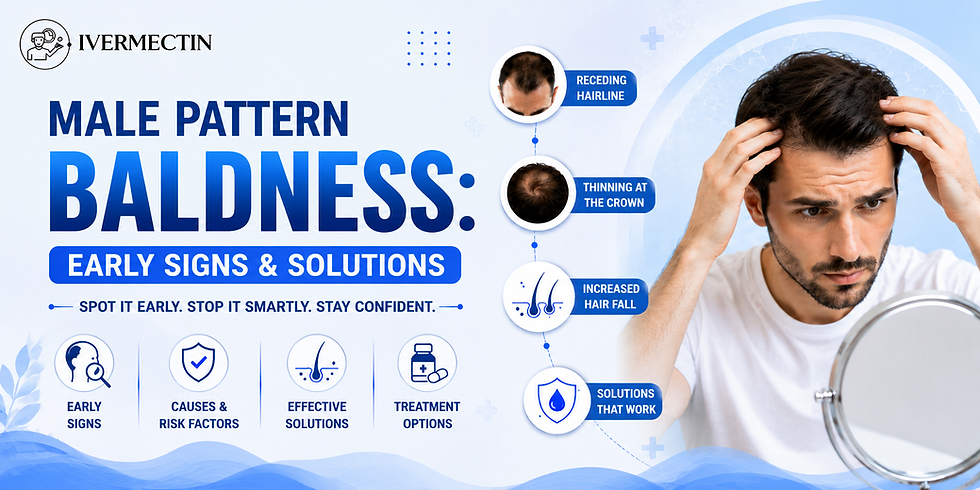
What Is Male Pattern Baldness?
Male pattern baldness, medically known as androgenetic alopecia, is a hereditary form of hair loss that develops gradually over time. It occurs when hair follicles become increasingly sensitive to a hormone called dihydrotestosterone (DHT).
As DHT affects susceptible follicles, the growth cycle shortens, causing hair to become thinner, shorter, and weaker. Eventually, some follicles stop producing visible hair altogether.
Male pattern baldness accounts for approximately 95% of hair loss cases in men and is strongly influenced by genetics.
How Common Is Male Pattern Baldness?
Male pattern baldness is extremely common:
Around 25% of men notice hair loss before age 30
Nearly 50% experience significant hair thinning by age 50
Up to 80% of men develop some degree of androgenetic alopecia during their lifetime
Because the condition progresses gradually, many men fail to recognize the warning signs until substantial hair loss has occurred.
Early Signs of Male Pattern Baldness
Identifying symptoms early can improve treatment outcomes significantly.
1. Receding Hairline
A receding hairline is often the first noticeable sign.
Common indicators include:
Hairline moving backward at the temples
Formation of an "M" shape
Increased forehead visibility
Uneven hairline edges
This is among the most recognizable early signs of male pattern baldness in your 20s and 30s.
2. Thinning at the Crown
Hair loss may begin at the crown (top rear portion of the scalp).
Warning signs include:
Visible scalp through hair
Reduced hair density
Circular thinning spot
Difficulty styling hair
Many men notice crown thinning before experiencing a major receding hairline.
3. Excessive Hair Shedding
Finding more hair than usual on:
Pillows
Shower drains
Hairbrushes
Clothing
can indicate increased follicle miniaturization.
Although shedding alone does not confirm baldness, persistent excessive shedding deserves attention.
4. Thinner Hair Texture
Hair may feel:
Finer
Weaker
Less voluminous
More fragile
Miniaturized follicles produce thinner strands over time, making the hair appear less dense.
5. Widening Part Line
A widening part or increased scalp visibility often suggests progressive hair thinning.
This symptom can be particularly noticeable under bright lighting.
6. Slower Hair Growth
Men experiencing early baldness may notice:
Hair taking longer to grow
Reduced length retention
Shorter hair cycles
Difficulty achieving previous hairstyles
What Causes Male Pattern Baldness?
Several factors contribute to androgenetic alopecia.
Genetics
The strongest risk factor is heredity.
If close family members experienced hair loss, your likelihood increases significantly.
Genetic sensitivity determines how follicles respond to DHT.
DHT (Dihydrotestosterone)
DHT is derived from testosterone through an enzyme called 5-alpha reductase.
Effects include:
Follicle shrinkage
Shortened growth cycles
Reduced hair thickness
Progressive follicle inactivity
Understanding DHT and hair loss explained helps clarify why some treatments target hormone activity.
Aging
Natural aging contributes to:
Reduced follicle productivity
Slower hair growth
Hair thinning
Scalp changes
Age-related factors often accelerate genetic hair loss.
Hormonal Changes
Fluctuations in hormone levels may influence hair growth cycles and accelerate thinning in susceptible individuals.
Lifestyle Factors
Although they do not directly cause male pattern baldness, the following can worsen hair loss:
Chronic stress
Poor nutrition
Smoking
Sleep deprivation
Scalp inflammation
Stages of Male Pattern Baldness
Doctors commonly classify hair loss using the Norwood Scale.
Stage 1
Minimal or no hair loss
Normal hairline
Stage 2
Slight temple recession
Early M-shaped hairline
Stage 3
Noticeable hairline recession
Significant thinning begins
Stage 4
Crown thinning becomes visible
Deeper recession
Stage 5
Larger bald areas
Thinning bridge between crown and front
Stage 6
Hair bridge disappears
Extensive baldness
Stage 7
Advanced hair loss
Hair remains only on sides and back
Early intervention provides the greatest chance of preserving existing hair.
How Is Male Pattern Baldness Diagnosed?
Healthcare professionals may evaluate:
Family history
Hair loss pattern
Scalp condition
Medical history
Blood tests (if needed)
Diagnosis helps rule out other causes such as:
Thyroid disorders
Nutritional deficiencies
Autoimmune conditions
Stress-related shedding
Best Hair Loss Treatment for Men in 2026
Modern treatments can slow progression and promote hair regrowth.
1. Minoxidil
Minoxidil is a topical solution applied directly to the scalp.
Benefits include:
Stimulates follicles
Improves blood flow
Supports hair regrowth
Slows thinning progression
Consistent use is necessary for long-term results.
2. Finasteride
Finasteride is an oral medication that reduces DHT production.
Benefits:
Decreases follicle damage
Preserves existing hair
Encourages regrowth in some users
It remains one of the most effective solutions for male pattern baldness.
3. Low-Level Laser Therapy (LLLT)
Laser devices may stimulate hair follicles through light energy.
Potential advantages:
Non-invasive treatment
Improved follicle activity
Enhanced hair density
Results vary between individuals.
4. PRP Therapy
Platelet-rich plasma therapy involves injecting growth-factor-rich plasma into the scalp.
Benefits may include:
Improved follicle health
Enhanced growth signals
Increased hair thickness
PRP is becoming increasingly popular among men seeking hair restoration.
5. Hair Transplant Surgery
Hair transplantation provides a permanent solution for advanced baldness.
Techniques include:
FUT (Follicular Unit Transplantation)
Strip harvesting method
High graft yield
FUE (Follicular Unit Extraction)
Individual follicle extraction
Minimal scarring
Faster recovery
Hair transplants often provide natural-looking, long-lasting results.
How to Prevent Male Pattern Baldness Naturally
While genetics cannot be changed, healthy habits may support stronger hair.
Eat a Nutrient-Rich Diet
Focus on:
Protein
Iron
Zinc
Vitamin D
Biotin
Omega-3 fatty acids
Healthy follicles require adequate nutrition.
Manage Stress
Chronic stress may worsen shedding and negatively affect hair growth cycles.
Helpful strategies include:
Meditation
Exercise
Yoga
Deep breathing
Adequate sleep
Improve Scalp Health
A healthy scalp supports optimal follicle function.
Recommendations:
Regular cleansing
Gentle hair products
Avoid excessive heat styling
Treat dandruff promptly
Avoid Smoking
Smoking may reduce blood flow to follicles and accelerate hair aging.
Quitting can benefit both hair and overall health.
Get Quality Sleep
Sleep supports:
Hormonal balance
Tissue repair
Follicle regeneration
Stress reduction
Aim for 7–9 hours nightly.
Hair Care Tips for Men Experiencing Hair Loss
Follow these simple strategies:
Use Gentle Shampoo
Avoid harsh chemicals that may irritate the scalp.
Limit Heat Styling
Frequent use of:
Hair dryers
Straighteners
Hot styling tools
can increase breakage.
Avoid Tight Hairstyles
Excessive tension can damage follicles and worsen thinning.
Stay Hydrated
Proper hydration supports healthy skin and scalp function.
Schedule Early Treatment
The earlier hair loss treatment begins, the better the chances of preserving hair density.
When Should You See a Healthcare Professional?
Consult a healthcare provider if you experience:
Sudden hair loss
Rapid thinning
Bald patches
Scalp irritation
Hair loss before age 20
Unexplained shedding
Early evaluation allows for timely treatment and improved outcomes.
The Future of Hair Regrowth Treatments
Research continues to improve hair restoration technologies.
Emerging developments include:
Stem cell therapies
Advanced PRP techniques
Follicle cloning research
Personalized genetic treatments
Improved topical growth stimulators
These innovations may expand future treatment options for men with androgenetic alopecia.
Conclusion
Male pattern baldness is a common condition that affects millions of men worldwide. Recognizing the early signs of hair loss in men, such as a receding hairline, crown thinning, and excessive shedding, allows for earlier intervention and better results.
Today, numerous treatment options—including minoxidil, finasteride, PRP therapy, laser therapy, and hair transplantation—can help slow progression and promote hair regrowth. Combined with healthy lifestyle habits and proper scalp care, many men can successfully manage hair loss and maintain confidence.
At Take Ivermectin™, we believe that education and early action are key to maintaining healthy hair. Understanding the causes of male pattern baldness and exploring effective treatment options can help you make informed decisions for long-term hair health.


Frequently Asked Questions (FAQs)
1. What is the first sign of male pattern baldness?
A receding hairline around the temples is usually the earliest and most noticeable sign.
2. Can male pattern baldness be reversed?
Early-stage hair loss may respond to treatments such as minoxidil and finasteride, helping preserve and regrow hair.
3. At what age does male pattern baldness start?
It can begin as early as the late teens or twenties, though many men notice symptoms in their 30s.
4. Is male pattern baldness inherited?
Yes. Genetics is the primary factor behind androgenetic alopecia.
5. Does stress cause male pattern baldness?
Stress does not directly cause genetic baldness but may worsen overall hair shedding.
6. What is the best treatment for male pattern baldness?
Commonly recommended options include minoxidil, finasteride, PRP therapy, and hair transplantation.
7. Can diet affect hair loss?
Yes. Nutrient deficiencies may contribute to hair thinning and weaker hair growth.
8. How can I stop hair thinning naturally?
Maintaining a balanced diet, reducing stress, improving scalp health, and adopting healthy lifestyle habits may support stronger hair growth.
9. Is a hair transplant permanent?
Transplanted follicles are generally permanent and resistant to DHT-related hair loss.
10. When should I seek treatment for hair loss?
You should seek evaluation as soon as you notice consistent hair thinning, a receding hairline, or increased shedding.


Comments