

Megather Tablet: Artemether and Lumefantrine Uses, Malaria Treatment, and Safety

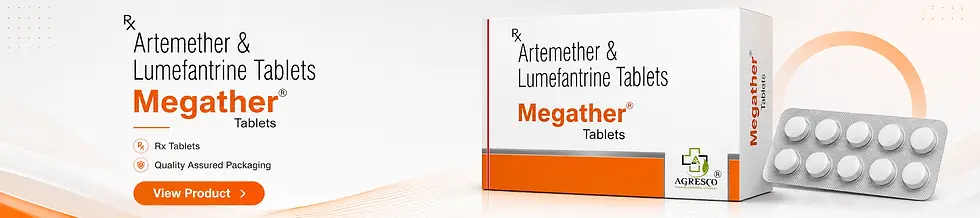
Megather Tablet is a prescription antimalarial medicine containing artemether and lumefantrine, two drugs combined to treat certain forms of uncomplicated malaria. Current Indian product information lists Megather as containing artemether 80 mg plus lumefantrine 480 mg per tablet and identifies Agresco Pharma as the marketer. Artemether-lumefantrine belongs to a group called artemisinin-based combination therapies, or ACTs, which the World Health Organization recommends for uncomplicated Plasmodium falciparum malaria. The medicine is intended to clear malaria parasites from the blood; it is not a routine malaria-prevention tablet and should not be used as a substitute for emergency treatment of severe malaria. Correct diagnosis, the infecting malaria species, geographic resistance patterns, body weight, pregnancy status, other medicines, and illness severity all affect treatment decisions. This guide explains how Megather works, how artemether-lumefantrine is generally used, important food and dosing considerations, side effects, interactions, and situations that require urgent hospital treatment.

What Is Megather Tablet and What Is It Used For?
Megather Tablet is an artemether-lumefantrine combination used for malaria treatment. Current Indian commercial drug information lists each Megather tablet as containing artemether 80 mg and lumefantrine 480 mg and describes it as a prescription medicine for malaria.
The combination is most important for treating uncomplicated malaria caused by P. falciparum, although the exact choice of antimalarial should follow diagnostic results and local treatment policy.
The WHO guidelines for malaria recommend artemether-lumefantrine as one of the ACT options for children and adults with uncomplicated P. falciparum malaria.
What does “uncomplicated malaria” mean?
Uncomplicated malaria means malaria infection without signs of severe organ dysfunction or other severe-disease criteria.
A person can still feel very ill with fever, chills, headache, muscle aches, nausea, weakness, or sweating, but they do not have manifestations such as coma, shock, severe breathing problems, acute kidney injury, or other severe malaria features.
Because uncomplicated malaria can progress rapidly, particularly with P. falciparum, diagnosis and effective treatment should not be unnecessarily delayed. WHO advises parasitological confirmation with microscopy or a rapid diagnostic test whenever promptly available.
Is Megather used to prevent malaria?
No. Artemether-lumefantrine is a treatment, not a routine malaria prophylaxis medicine.
The current U.S. Coartem prescribing information explicitly states that artemether-lumefantrine is not approved for malaria prevention. Travelers who need preventive medication require a different regimen selected according to their destination, health history, pregnancy status, drug resistance, and other factors.
Can Megather treat severe malaria?
No. Oral artemether-lumefantrine should not be relied upon as definitive treatment for severe malaria.
Current CDC guidance recommends intravenous artesunate as soon as possible for severe malaria because the illness can become fatal quickly.
Signs such as impaired consciousness, seizures, shock, severe breathing difficulty, acute kidney injury, severe anemia, or very high parasite levels require hospital treatment rather than routine outpatient tablets.
How Do Artemether and Lumefantrine Treat Malaria?
Artemether and lumefantrine attack malaria parasites in complementary ways. Artemether acts rapidly to reduce the parasite burden, while lumefantrine remains active longer and helps eliminate parasites that remain after the initial rapid effect.
WHO describes this two-drug strategy as the basis of artemisinin-based combination therapy.
What does artemether do?
Artemether is an artemisinin derivative.
Artemisinin derivatives act rapidly against malaria parasites in the blood and can sharply reduce the number of circulating parasites during the early days of treatment.
This rapid action is one reason ACTs have become central to treatment of uncomplicated P. falciparum malaria.
What does lumefantrine do?
Lumefantrine is the longer-acting partner medicine.
Its role is to continue killing malaria parasites after the artemether component has rapidly reduced parasite numbers.
Using two drugs with different characteristics improves treatment effectiveness and helps reduce the likelihood that parasites survive therapy.
Artemether should therefore not be used alone as oral monotherapy for uncomplicated malaria. WHO specifically discourages oral artemisinin monotherapy because it contributes to the development and spread of drug resistance.
Why does malaria drug resistance matter?
Malaria parasites can become less susceptible to antimalarial medicines over time.
WHO therefore recommends that countries continuously monitor ACT effectiveness and adapt malaria-treatment policies according to resistance patterns. Artemether-lumefantrine remains one of the most widely used ACTs globally, but treatment choice should still reflect local resistance data and national guidance.
Artemether-lumefantrine works as a partnership: artemether rapidly reduces the malaria parasite burden, while lumefantrine clears remaining parasites over a longer period. Finishing the correctly prescribed course is therefore important even when fever and chills begin improving after the first doses.
How Is Megather Tablet Taken for Malaria Treatment?
Artemether-lumefantrine treatment is generally given as a complete multi-dose course rather than as a single malaria tablet. The exact number of Megather tablets and timing should come from the product prescription or treating clinician because Megather contains 80 mg/480 mg per tablet, while many international guidelines express dosing using 20 mg/120 mg artemether-lumefantrine tablets.
Do not convert between formulations or tablet strengths without professional guidance.
Why should artemether-lumefantrine be taken with food?
Food significantly improves absorption of artemether and especially lumefantrine.
Current prescribing information advises taking artemether-lumefantrine with food and encourages people with malaria to resume eating as soon as they can tolerate it. Fat-containing food or a milky drink can be particularly helpful for absorption.
Poor absorption can reduce lumefantrine exposure and may increase the risk that malaria returns after treatment.
What is the usual artemether-lumefantrine treatment pattern?
WHO recommends that ACT regimens provide three days of treatment with an artemisinin derivative for uncomplicated malaria. Traditional artemether-lumefantrine regimens are weight-based and use multiple doses across those three days.
For example, standard 20 mg/120 mg formulations have historically been dosed according to body weight, with larger patients receiving more tablets per dose. Megather's 80 mg/480 mg strength packages four times that amount into one tablet, so its tablet count should not be copied from a 20 mg/120 mg product.
There is also an important jurisdictional difference: CDC guidance updated in July 2026 now recommends an extended five-day, 10-dose artemether-lumefantrine regimen for uncomplicated P. falciparum malaria treated in the United States.
That U.S. recommendation should not be automatically substituted for local Indian or WHO-directed prescribing.
General artemether-lumefantrine medication information
Treatment point | General information | Why it matters |
Megather strength | Artemether 80 mg + lumefantrine 480 mg per tablet is currently listed for Megather | Tablet count cannot be copied from lower-strength products |
Treatment type | Artemisinin-based combination therapy | Uses two antimalarials with complementary actions |
Main role | Treatment of appropriate uncomplicated malaria | Not intended as routine prevention |
Treatment duration | ACT treatment generally spans several days | Completing the full course helps clear remaining parasites |
Food | Take according to prescribing instructions with food when tolerated | Improves artemether/lumefantrine absorption |
Children | Artemether-lumefantrine dosing is weight based | Adult tablet quantities should never be automatically given to a child |
Severe malaria | Oral Megather is not definitive treatment | Severe disease requires urgent hospital treatment, usually IV artesunate |
P. vivax/P. ovale | Blood-stage treatment may not prevent relapse from liver-stage parasites | Additional anti-relapse treatment may be required after appropriate testing |
This table summarizes general treatment principles and is not a personalized Megather dosing schedule.
What if vomiting occurs after a dose?
Vomiting matters because it may prevent enough medicine from being absorbed.
Do not automatically repeat doses without checking the product instructions or contacting the treating clinician, especially when vomiting is persistent. A person who cannot keep oral medication or fluids down may need reassessment because inability to tolerate oral treatment can make outpatient management unsafe.
Does artemether-lumefantrine cure every type of malaria completely?
Not necessarily.
Artemether-lumefantrine treats malaria parasites circulating in the blood. With P. vivax and P. ovale, dormant liver forms called hypnozoites can cause later relapses, so additional anti-relapse treatment may be required.
Those medicines require separate clinical decisions and, in some cases, testing for G6PD deficiency before they are used.
What Are the Side Effects and Drug Interactions of Megather?
Artemether-lumefantrine is generally well tolerated when appropriately prescribed, but malaria itself produces many symptoms that overlap with medicine side effects.
Current Coartem labeling lists headache, reduced appetite, dizziness, weakness, joint pain, and muscle pain among commonly reported effects in adults. Fever, cough, vomiting, reduced appetite, and headache are among common reports in children.
What common side effects can occur?
Possible effects include
headache;
dizziness;
reduced appetite;
weakness or tiredness;
muscle aches;
joint aches;
nausea or vomiting; and
abdominal discomfort.
Not every symptom during treatment is caused by the medicine. Fever, headache, weakness, appetite loss, and muscle pain are also common manifestations of malaria itself.
Why is heart rhythm safety important?
Lumefantrine can prolong the QT interval, an electrical measurement on the heart's ECG.
Current prescribing information advises avoiding artemether-lumefantrine in people with congenital long-QT syndrome, clinically significant rhythm disorders, low potassium or magnesium, or concurrent medicines that substantially prolong QT.
Medicines of concern can include certain antiarrhythmics, antidepressants, antipsychotics, antibiotics, antifungals, and other antimalarials.
Which medicines can interfere with artemether-lumefantrine?
Strong CYP3A4-inducing medicines can lower artemether or lumefantrine concentrations and make malaria treatment less effective.
Current prescribing information specifically contraindicates strong CYP3A4 inducers such as:
rifampin;
carbamazepine;
phenytoin; and
St. John's wort.
Some CYP3A4 inhibitors may instead increase drug concentrations and potentially increase QT-related risk.
Antiretroviral medicines used for HIV treatment can also interact in complex ways, so the malaria clinician needs a complete medication list.
Can it affect hormonal contraception?
Possibly.
Current artemether-lumefantrine labeling states that the combination may reduce the effectiveness of systemic hormonal contraceptives and advises an additional non-hormonal or barrier contraceptive method during treatment.
Women taking oral contraceptives, patches, or other systemic hormonal contraception should discuss this interaction with a clinician or pharmacist.
Who Needs Extra Caution With Megather Tablet?
Pregnancy, childhood, major liver or kidney disease, heart-rhythm disorders, and concurrent medicines can change the safety assessment for artemether-lumefantrine.
Malaria itself can be dangerous, so these situations require informed treatment rather than simply avoiding medication.
Can artemether-lumefantrine be used during pregnancy?
Current WHO guidance supports artemether-lumefantrine for uncomplicated P. falciparum malaria in pregnancy, including as the preferred ACT in the first trimester based on the available human safety evidence.
This is an area where older malaria guidance may differ from current recommendations. Pregnant patients should therefore be treated according to up-to-date national or specialist guidance rather than older package information found online.
Malaria during pregnancy can itself cause serious maternal and fetal complications, so suspected infection needs prompt medical evaluation.
Can children take artemether-lumefantrine?
Yes, appropriate artemether-lumefantrine formulations can be used in children, but dosing is based primarily on body weight.
Current WHO and CDC guidance supports use in small children under appropriate dosing protocols, while the U.S. Coartem label includes patients weighing at least 5 kg.
Megather's 80 mg/480 mg tablet is a high-strength formulation, so it should not be assumed to be appropriate for a child simply because the active ingredients themselves are used in pediatric malaria treatment.
What about liver or kidney disease?
People with significant liver or kidney impairment should have treatment reviewed by a clinician.
Current Coartem prescribing information notes that efficacy and safety have not been adequately studied in severe hepatic or severe renal impairment.
Can people with heart disease take Megather?
It depends on the heart condition and other medicines being used.
People with known long-QT syndrome, serious rhythm problems, significant bradycardia, severe cardiac disease, electrolyte abnormalities, or medicines that prolong QT require particular caution.
A full medication history is especially important because several commonly used drugs can interact with lumefantrine.
Dos and don'ts for safer artemether-lumefantrine treatment
Do | Don't |
Confirm malaria promptly with an appropriate test when available | Self-treat every unexplained fever as malaria |
Take the medicine exactly according to the prescribed regimen | Stop the course because fever improves early |
Take doses with food or a suitable milky drink when tolerated | Routinely take it while fasting if food can be tolerated |
Tell the clinician about all medicines and supplements | Combine it casually with other antimalarials |
Mention pregnancy or breastfeeding before treatment | Rely on outdated pregnancy advice found online |
Tell the clinician about heart-rhythm problems | Ignore a history of long-QT syndrome or fainting |
Return for reassessment if symptoms worsen or malaria returns | Keep repeating courses without confirming treatment failure |
Seek urgent hospital care for severe malaria symptoms | Use an oral tablet as a substitute for IV treatment in severe malaria |
Safety: When Does Malaria Need Urgent Hospital Treatment?
Malaria can deteriorate quickly, particularly when caused by P. falciparum. Seek urgent hospital assessment for confusion, unusual sleepiness, seizures, fainting, severe weakness, breathing difficulty, shock, very little urine, jaundice with severe illness, severe anemia, repeated vomiting, inability to drink or take tablets, or other rapidly worsening symptoms.
The CDC guidance on treatment of severe malaria recommends intravenous artesunate as soon as possible for patients meeting severe-malaria criteria, regardless of the infecting Plasmodium species. Oral artemether-lumefantrine should not delay definitive hospital treatment.
A person who does not improve as expected, becomes sicker after starting therapy, or develops recurrent fever after completing treatment also needs reassessment. Malaria can recur because of inadequate absorption, reinfection, relapse with certain species, or treatment failure.
Seek urgent care for a serious medication reaction such as facial or throat swelling, breathing difficulty, fainting, a severe blistering rash, or significant palpitations. Postmarketing reports with artemether-lumefantrine include serious hypersensitivity reactions such as anaphylaxis and angioedema.
Conclusion
Megather Tablet contains artemether 80 mg and lumefantrine 480 mg and is marketed as a prescription treatment for malaria. Artemether-lumefantrine is a well-established ACT recommended internationally for appropriate uncomplicated malaria, particularly P. falciparum, but the exact regimen depends on diagnosis, body weight, geography, resistance patterns, and local guidance. Food improves absorption, and completing the prescribed course is important.
Megather should not be used for routine malaria prevention or as definitive treatment for severe malaria. Because interactions, QT prolongation, pregnancy, pediatric dosing, and malaria species can affect treatment, use it only under appropriate clinical guidance. Anyone with severe symptoms or worsening illness needs urgent medical assessment rather than additional self-dosing.

Frequently Asked Questions
1. What is Megather Tablet used for?
Megather Tablet is used to treat appropriate cases of malaria and contains artemether plus lumefantrine. The combination is an artemisinin-based combination therapy used especially for uncomplicated P. falciparum malaria. It is not intended as routine malaria prevention or definitive treatment for severe malaria.
2. What strength of artemether and lumefantrine is in Megather?
Current Indian product information lists Megather Tablet as containing artemether 80 mg and lumefantrine 480 mg per tablet. Because international artemether-lumefantrine products may use different tablet strengths, do not copy another brand's tablet count or dosing schedule.
3. Should Megather be taken with food?
Yes, artemether-lumefantrine should generally be taken with food when tolerated because food improves absorption of both medicines, particularly lumefantrine. Poor intake can reduce drug exposure and potentially increase treatment-failure risk. Follow the specific instructions provided with the prescribed Megather course.
4. Can Megather be used to prevent malaria before travel?
No. Artemether-lumefantrine is primarily a malaria treatment and is not approved as routine prophylaxis. Travelers who need malaria prevention should receive a destination-specific preventive medicine based on local resistance, medical history, pregnancy status, and other individual factors.
5. Can pregnant women take artemether-lumefantrine?
Current WHO guidance supports artemether-lumefantrine for uncomplicated P. falciparum malaria during pregnancy and identifies it as the preferred ACT in the first trimester based on available human safety data. Pregnancy malaria requires prompt clinician-directed treatment rather than self-medication.
6. What should I do if malaria symptoms get worse after taking Megather?
Seek medical reassessment promptly, especially for confusion, seizures, severe vomiting, breathing difficulty, fainting, reduced urine, or rapidly worsening weakness. Severe malaria requires hospital care and intravenous artesunate rather than relying on oral artemether-lumefantrine alone.


Comments