
.png)
Pelvic Pain in Women: Common Causes Explained, Symptoms, Diagnosis & Treatment Options

Pelvic pain in women is a common health concern that affects millions worldwide. It can range from mild discomfort to severe, debilitating pain that interferes with daily activities, work, and overall quality of life. The pain may occur suddenly, come and go with menstrual cycles, or persist for months as chronic pelvic pain.
Understanding the causes of pelvic pain is important because it can sometimes indicate an underlying medical condition requiring treatment. While menstrual cramps are often the most recognized cause, many other reproductive, urinary, digestive, and musculoskeletal disorders can contribute to pelvic discomfort.
In this comprehensive guide from Take Ivermectin™, we explain the most common causes of pelvic pain in women, associated symptoms, diagnosis methods, treatment options, and practical ways to manage discomfort.
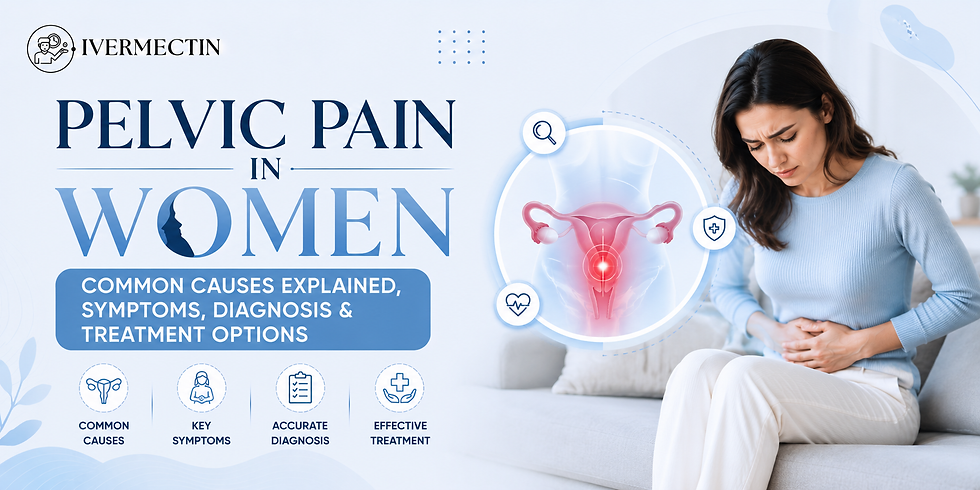
What Is Pelvic Pain?
Pelvic pain refers to discomfort occurring in the lower abdomen, below the belly button, and between the hips.
The pain can be:
Sharp or stabbing
Dull and aching
Cramp-like
Intermittent or constant
Mild to severe
Some women experience pelvic pain only during menstruation, while others may have pain during urination, bowel movements, sexual intercourse, or physical activity.
When pelvic pain lasts for six months or longer, it is generally classified as chronic pelvic pain.
Common Causes of Pelvic Pain in Women
Several conditions can cause pelvic pain. Identifying the source is essential for effective treatment.
1. Menstrual Cramps (Dysmenorrhea)
Menstrual cramps are among the most common causes of pelvic pain in women. These cramps occur when the uterus contracts to shed its lining during menstruation.
Symptoms
Lower abdominal cramping
Back pain
Nausea
Fatigue
Headaches
For many women, discomfort improves after the first few days of the menstrual cycle. However, unusually severe pelvic pain during menstruation may indicate an underlying condition such as endometriosis or fibroids.
2. Endometriosis
Endometriosis is a chronic condition in which tissue similar to the uterine lining grows outside the uterus. It commonly affects the ovaries, fallopian tubes, and pelvic tissues.
Endometriosis Symptoms
Severe menstrual pain
Pain during intercourse
Painful bowel movements
Infertility issues
Chronic pelvic pain
Because symptoms often overlap with other conditions, diagnosis may take time. Endometriosis remains one of the leading causes of chronic pelvic pain in women.
3. Ovarian Cysts
Ovarian cysts are fluid-filled sacs that develop on or inside the ovaries. Most are harmless and disappear naturally, but larger cysts can cause significant discomfort.
Ovarian Cyst Pain Symptoms
One-sided pelvic pain
Bloating
Abdominal pressure
Pain during physical activity
Irregular menstrual cycles
If a cyst ruptures or twists (ovarian torsion), emergency medical care may be necessary.
4. Uterine Fibroids
Uterine fibroids are non-cancerous growths that develop within the muscular wall of the uterus.
Symptoms
Heavy menstrual bleeding
Pelvic pressure
Frequent urination
Lower abdominal pain in women
Pain during intercourse
The size and location of fibroids often determine symptom severity.
5. Pelvic Inflammatory Disease (PID)
Pelvic inflammatory disease is an infection affecting the female reproductive organs. It often develops from untreated sexually transmitted infections.
Symptoms of PID
Pelvic pain
Fever
Abnormal vaginal discharge
Pain during intercourse
Painful urination
Prompt treatment is important because untreated PID can lead to infertility and chronic pelvic pain.
6. Ovulation Pain (Mittelschmerz)
Some women experience mild pelvic pain during ovulation, typically occurring midway through the menstrual cycle.
Characteristics
Pain on one side of the pelvis
Lasts minutes to hours
Mild discomfort
May occur monthly
Although generally harmless, persistent pain should be evaluated by a healthcare professional.
7. Urinary Tract Infections (UTIs)
Urinary tract infections can produce pelvic discomfort, especially when the bladder becomes inflamed.
Symptoms
Burning sensation during urination
Frequent urination
Pelvic pressure
Cloudy urine
Lower abdominal discomfort
Antibiotic treatment is often effective when diagnosed early.
8. Interstitial Cystitis
Also known as painful bladder syndrome, interstitial cystitis causes chronic bladder pressure and pelvic pain.
Common Symptoms
Frequent urination
Bladder discomfort
Pelvic tenderness
Pain that worsens as the bladder fills
The exact cause remains unclear, but treatment can help improve quality of life.
9. Irritable Bowel Syndrome (IBS)
Digestive disorders may also contribute to female pelvic pain.
IBS Symptoms
Abdominal cramping
Bloating
Constipation
Diarrhea
Pelvic discomfort
Symptoms often worsen during periods of stress or after consuming certain foods.
10. Pregnancy-Related Conditions
Pregnancy can cause various forms of pelvic discomfort due to hormonal changes and growing uterine pressure.
Potential Causes
Round ligament pain
Miscarriage
Ectopic pregnancy
Labor-related discomfort
Severe pain during pregnancy requires immediate medical evaluation.
Less Common Causes of Pelvic Pain
Other medical conditions associated with pelvic pain include:
Adenomyosis
Pelvic floor dysfunction
Appendicitis
Kidney stones
Hernias
Nerve-related disorders
Scar tissue from previous surgeries
A comprehensive evaluation helps determine the underlying cause.
Pelvic Pain Symptoms to Watch For
The symptoms accompanying pelvic pain often provide important clues about the underlying condition.
Common Pelvic Pain Symptoms
Lower abdominal pain
Cramping
Pelvic pressure
Pain during sex
Painful urination
Heavy periods
Irregular bleeding
Bloating
Back pain
Fever
Persistent or worsening symptoms should not be ignored.
How Doctors Diagnose Pelvic Pain in Women
Diagnosing pelvic pain involves reviewing symptoms, medical history, and performing physical examinations.
Medical History Assessment
Doctors may ask:
When did the pain begin?
Is it related to menstrual cycles?
Does pain occur during intercourse?
Are urinary or digestive symptoms present?
Physical Examination
A pelvic examination may identify:
Tenderness
Masses
Infection signs
Structural abnormalities
Diagnostic Tests
Blood Tests
Help detect:
Infection
Inflammation
Pregnancy
Urine Tests
Used to identify urinary tract infections.
Ultrasound
Frequently used to evaluate:
Ovarian cysts
Fibroids
Reproductive organs
MRI Scans
Provide detailed images for complex cases.
Laparoscopy
A minimally invasive surgical procedure often used to diagnose endometriosis and other pelvic conditions.
Understanding how doctors diagnose pelvic pain in women helps patients prepare for evaluation and treatment.
Treatment for Pelvic Pain
The best treatment depends on the underlying cause.
Medications
Treatment options may include:
Pain relievers
Anti-inflammatory medications
Hormonal therapies
Antibiotics for infections
Physical Therapy
Pelvic floor physical therapy may help women experiencing muscle-related pain or pelvic floor dysfunction.
Benefits include:
Improved muscle strength
Reduced discomfort
Better mobility
Lifestyle Modifications
Healthy habits can significantly reduce symptoms.
Helpful Strategies
Regular exercise
Balanced nutrition
Adequate hydration
Stress management
Quality sleep
These approaches can be particularly beneficial for women experiencing chronic pelvic pain.
Surgical Treatment
In certain situations, surgery may be recommended to treat:
Endometriosis
Large ovarian cysts
Fibroids
Adhesions
The choice of procedure depends on symptom severity and future reproductive goals.
Home Remedies for Mild Pelvic Pain
Some women find relief using self-care strategies.
Helpful Home Approaches
Warm heating pads
Warm baths
Gentle stretching
Relaxation exercises
Light physical activity
Anti-inflammatory foods
However, home remedies should not replace professional medical care when symptoms are severe or persistent.
When Should You See a Doctor?
Seek medical attention if pelvic pain is accompanied by:
Sudden severe pain
Heavy bleeding
Fever
Fainting
Vomiting
Difficulty urinating
Pregnancy-related complications
Early diagnosis often improves treatment outcomes and prevents complications.
Preventing Pelvic Pain
Not all causes of pelvic pain are preventable, but certain measures may reduce risk.
Prevention Tips
Attend regular gynecological checkups
Practice safe sex
Treat infections promptly
Maintain a healthy weight
Stay physically active
Manage stress effectively
Preventive healthcare plays a vital role in long-term reproductive wellness.
The Importance of Women's Reproductive Health
Many cases of pelvic pain stem from reproductive health issues that benefit from early recognition and treatment. Awareness of symptoms, regular screenings, and timely medical consultation can significantly improve outcomes.
At Take Ivermectin™, we believe that educating women about common health concerns empowers informed healthcare decisions and promotes overall well-being.
Conclusion
Pelvic pain in women can result from a wide range of conditions, including menstrual cramps, endometriosis, ovarian cysts, uterine fibroids, pelvic inflammatory disease, urinary tract infections, and digestive disorders. While occasional discomfort may be harmless, persistent or severe pain should never be ignored.
Understanding the causes of pelvic pain in women, recognizing warning signs, and seeking appropriate medical care are essential steps toward effective treatment and improved quality of life. Early diagnosis often leads to better outcomes and helps prevent long-term complications associated with chronic pelvic pain.
For more women's health education and wellness resources, visit Take Ivermectin™ and stay informed about important health topics.

Frequently Asked Questions (FAQs)
1. What causes pelvic pain in women?
Common causes include menstrual cramps, endometriosis, ovarian cysts, uterine fibroids, pelvic inflammatory disease, urinary tract infections, and digestive disorders.
2. What is chronic pelvic pain?
Chronic pelvic pain is pelvic discomfort that lasts six months or longer and may be caused by reproductive, urinary, digestive, or musculoskeletal conditions.
3. Can ovarian cysts cause pelvic pain?
Yes. Larger ovarian cysts may cause pelvic pressure, bloating, and one-sided pelvic pain.
4. Is pelvic pain always related to menstruation?
No. Pelvic pain may also result from infections, digestive conditions, urinary disorders, pregnancy complications, or pelvic floor dysfunction.
5. How is pelvic pain diagnosed?
Doctors may use medical history, pelvic exams, blood tests, urine tests, ultrasound imaging, MRI scans, and laparoscopy.
6. What treatments are available for pelvic pain?
Treatment may include medications, hormonal therapy, antibiotics, physical therapy, lifestyle changes, or surgery depending on the cause.
7. When should I seek emergency care for pelvic pain?
Seek immediate medical attention for severe pain, heavy bleeding, fever, fainting, vomiting, or pain during pregnancy.
8. Can lifestyle changes help reduce pelvic pain?
Yes. Regular exercise, healthy eating, stress management, proper hydration, and adequate sleep may help manage symptoms in many women.


Comments