
.png)
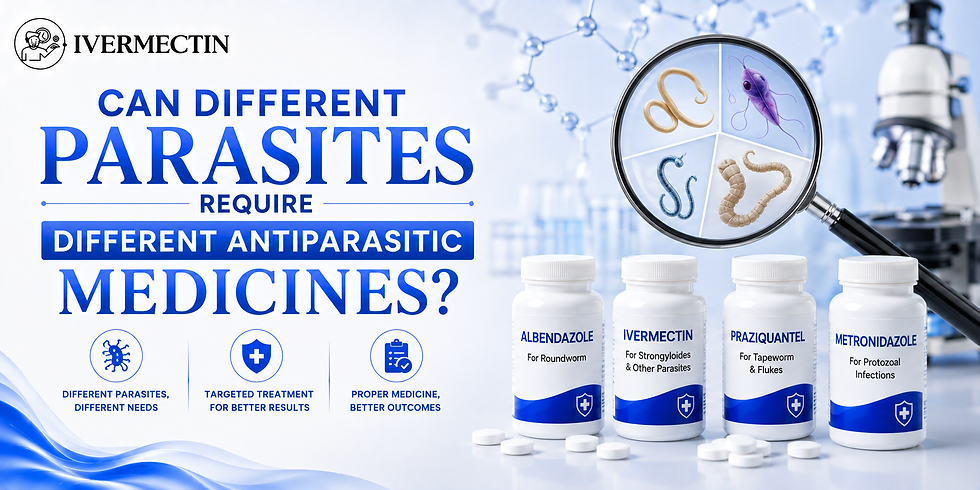
Can Different Parasites Require Different Antiparasitic Medicines?

When people hear the word "parasite," they often assume that a single medication can treat every parasitic infection. In reality, parasites are incredibly diverse. Some live in the intestines, others affect the skin or bloodstream, and each type may respond differently to treatment.
Understanding Antiparasitic Medicines helps explain why healthcare providers carefully identify the specific parasite before recommending medication. Choosing the right treatment improves the chances of success while reducing unnecessary medication use.
Take Ivermectin™, we believe patients make better healthcare decisions when they understand how treatments are selected. This article explains why different parasites require different medicines and what factors healthcare providers consider when choosing the most appropriate therapy.
What Are Parasites?
Parasites are organisms that live on or inside another living organism, known as the host, and obtain nutrients at the host's expense.
The three major groups include:
Protozoa
Helminths (worms)
Ectoparasites (such as mites and lice)
Each group differs in size, biology, and how it affects the human body.
Why One Medicine Doesn't Treat Every Parasite
Different parasites have unique biological characteristics.
Some differences include:
Body structure
Life cycle
Reproduction
Preferred location in the body
Sensitivity to medications
Because of these differences, a medication effective against one parasite may have little or no effect against another.
How Antiparasitic Medicines Work
Antiparasitic medications work through different mechanisms depending on the drug and the parasite being treated.
Some medicines:
Disrupt the parasite's nervous system.
Prevent nutrient absorption.
Damage protective outer structures.
Stop reproduction.
Interfere with energy production.
Healthcare providers select medications based on which mechanism is most effective for the identified parasite.
Factors That Influence Treatment Choice
Several important factors help determine which medication is most appropriate.
These include:
Type of Parasite
Different parasites respond to different medications.
Location of Infection
Parasites may affect:
Intestines
Skin
Bloodstream
Muscles
Liver
Lungs
Treatment depends partly on where the parasite is located.
Severity of Infection
Mild infections may require different management than more severe or widespread infections.
Patient Factors
Healthcare providers also consider:
Age
Pregnancy
Medical history
Current medications
Allergies
Liver and kidney function
Common Types of Antiparasitic Medications
Several classes of medications are used to treat parasitic infections.
Examples include:
Albendazole
Mebendazole
Praziquantel
Metronidazole (for certain protozoal infections)
Nitazoxanide
Each medication has approved uses and may be recommended for different infections depending on the diagnosis.
Why Accurate Diagnosis Matters
Many parasitic infections produce similar symptoms, including:
Diarrhea
Abdominal pain
Fatigue
Weight loss
Skin itching
Fever
Because symptoms overlap, laboratory testing is often needed to identify the specific cause.
Without an accurate diagnosis, treatment may be ineffective or unnecessarily delayed.
Comparison of Treatment Factors
Treatment Factor | Why It Matters |
Type of Parasite | Determines medication choice |
Infection Location | Influences treatment approach |
Patient Age | Affects medication selection |
Medical History | Helps reduce treatment risks |
Severity of Infection | Guides treatment duration and follow-up |
Why Self-Diagnosis Can Be Risky
Many parasitic infections share symptoms with other medical conditions, making self-diagnosis difficult.
Abdominal pain, diarrhea, itching, fatigue, or skin rashes may result from infections, allergies, digestive disorders, or other health problems.
Treating yourself without a confirmed diagnosis may:
Delay appropriate medical care.
Lead to unnecessary medication use.
Increase the risk of side effects.
Allow the underlying condition to worsen.
Make future diagnosis more difficult.
For these reasons, healthcare providers recommend confirming the cause of symptoms before beginning Parasite Treatment .
How Healthcare Providers Diagnose Parasitic Infections
An accurate Medical Diagnosis helps ensure that the most effective treatment is selected.
Depending on your symptoms, a healthcare provider may recommend:
Medical History
Questions about:
Recent travel
Food and water exposure
Contact with animals
Current symptoms
Previous medical conditions
Physical Examination
A physical exam may help identify signs of infection and determine whether additional testing is needed.
Laboratory Tests
Common tests may include:
Stool sample analysis
Blood tests
Microscopic examination
Imaging studies in selected cases
Tissue biopsy for certain rare infections
The specific tests depend on the suspected parasite and the part of the body involved.
Can More Than One Medication Be Needed?
Some parasitic infections respond well to a single medication, while others may require:
More than one antiparasitic medicine.
Repeat treatment after a specific period.
Supportive care such as hydration.
Follow-up laboratory testing.
Treatment of close household contacts in certain situations.
Your healthcare provider will determine the most appropriate treatment plan based on your diagnosis and response to therapy.
Preventing Parasitic Infections
Prevention is an important part of protecting your health.
Simple preventive measures include:
Washing hands thoroughly with soap and water.
Drinking safe, clean water.
Cooking meat to recommended temperatures.
Washing fruits and vegetables before eating.
Wearing footwear in areas where soil may be contaminated.
Practicing good personal hygiene.
Following travel health recommendations when visiting high-risk regions.
These habits can significantly reduce the risk of many Parasitic Infections .
Why Professional Medical Guidance Matters
Every parasitic infection is unique, and treatment decisions should always be based on a confirmed diagnosis.
Healthcare providers consider:
The type of parasite.
The location of the infection.
The severity of symptoms.
Your age and medical history.
Pregnancy status, when applicable.
Possible medication interactions.
This individualized approach helps maximize treatment effectiveness while minimizing unnecessary risks.
Staying Informed About Treatment
Medical knowledge continues to evolve as researchers learn more about parasites and develop improved therapies.
Patients can make informed decisions by:
Using reliable health information.
Following professional medical advice.
Completing prescribed treatment as directed.
Attending follow-up appointments when recommended.
Asking questions about their diagnosis and medications.
Understanding your treatment plan is an important part of successful recovery.
"The right antiparasitic medicine depends on identifying the right parasite—not simply treating the symptoms."
Conclusion
Different parasites require different treatment strategies because they vary in their biology, life cycles, and the way they affect the human body. An accurate diagnosis allows healthcare providers to select the most appropriate medication, improving treatment success while reducing unnecessary medication use.
Rather than relying on symptoms alone, patients should seek professional medical evaluation whenever a parasitic infection is suspected. Evidence-based treatment, combined with preventive measures and follow-up care, offers the best path toward recovery.
Take Ivermectin™ , we are committed to providing trustworthy, evidence-based educational resources that help readers better understand Antiparasitic Medicines , treatment options, and informed healthcare decisions.


Frequently Asked Questions (FAQs)
1. Can one antiparasitic medicine treat every parasite?
No. Different parasites respond to different medications, so treatment depends on the specific parasite identified.
2. Why is laboratory testing important before treatment?
Laboratory tests help identify the exact parasite, allowing healthcare providers to prescribe the most appropriate medication.
3. Is ivermectin effective for all parasitic infections?
No. Ivermectin is effective for certain approved parasitic infections but is not appropriate for every type of parasite.
4. Can symptoms alone identify a parasitic infection?
Not always. Many parasitic infections share symptoms with other illnesses, making professional evaluation and testing important.
5. How can I reduce my risk of getting a parasitic infection?
Good hygiene, safe food and water practices, proper cooking of meat, and following travel health recommendations can help lower your risk.
6. When should I see a healthcare provider?
You should seek medical advice if you experience persistent gastrointestinal symptoms, unexplained weight loss, ongoing itching, fever, or other symptoms that could suggest a parasitic infection.

Comments