
.png)
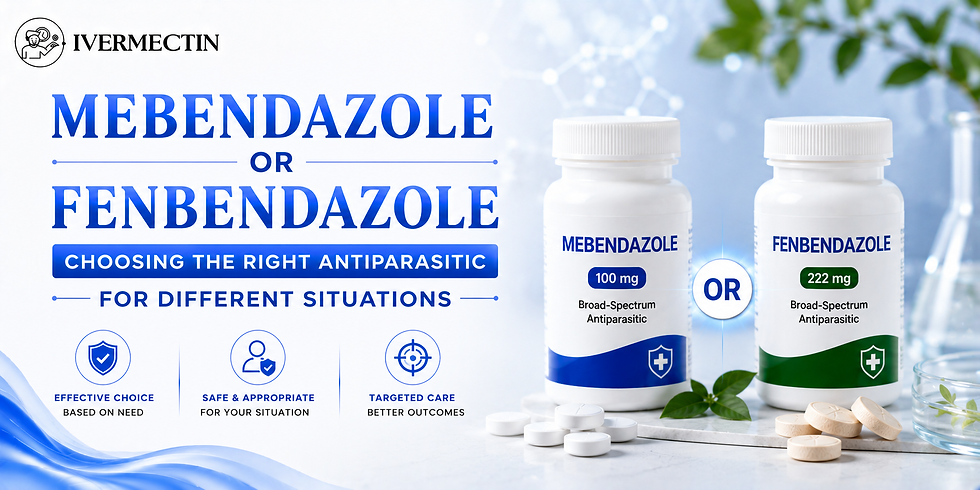
Mebendazole or Fenbendazole: Choosing the Right Antiparasitic for Different Situations

When researching treatments for parasitic infections, many people come across both Mebendazole and Fenbendazole . Because these medications belong to the same drug family, it's common to wonder which one is more appropriate.
The answer isn't as simple as choosing one over the other. The right medication depends on several factors, including the type of parasite, available clinical evidence, regulatory approval, and the patient's overall health.
Take Ivermectin™, we believe patients benefit from understanding how medications differ rather than relying on online discussions alone. This article explains the key differences between mebendazole and fenbendazole and why treatment decisions should always be guided by qualified healthcare professionals.
What Is Mebendazole?
Mebendazole is a prescription antiparasitic medication used in many countries to treat specific intestinal worm infections in humans.
It works by preventing susceptible parasites from absorbing glucose, eventually causing them to lose energy and die.
Healthcare providers commonly prescribe mebendazole for infections caused by susceptible:
Pinworms
Roundworms
Whipworms
Hookworms
Treatment recommendations depend on the diagnosed parasite and the patient's individual medical situation.
What Is Fenbendazole?
Fenbendazole is an antiparasitic medication widely used in veterinary medicine to treat various parasitic infections in animals.
Like mebendazole, it belongs to the benzimidazole class and works by disrupting the parasite's energy metabolism.
Researchers continue to study fenbendazole in laboratory settings for various scientific questions. However, laboratory findings alone do not establish that a medication is safe or effective for human medical use.
How Do These Medications Compare?
Although they share a similar mechanism of action, there are several important differences.
Approved Uses
Mebendazole has approved human uses in many countries for certain intestinal parasitic infections.
Fenbendazole is primarily formulated and marketed for veterinary use.
Clinical Evidence
Mebendazole has extensive clinical evidence supporting its approved human indications.
Research involving fenbendazole for additional applications remains ongoing.
Availability
Availability varies depending on local regulations and healthcare systems.
Factors That Influence Treatment Decisions
Healthcare providers consider multiple factors before recommending an antiparasitic medication.
These include:
The specific parasite involved
Laboratory test results
Patient age
Pregnancy status
Medical history
Other medications being taken
Regional treatment guidelines
Because every patient is different, treatment should always be individualized.
Side-by-Side Comparison
Feature | Mebendazole | Fenbendazole |
Drug Class | Benzimidazole | Benzimidazole |
Primary Use | Human antiparasitic | Veterinary antiparasitic |
Approved Human Uses | Certain intestinal worm infections | Varies by regulatory approval |
Clinical Evidence | Well established for approved uses | Ongoing research for additional applications |
Medical Supervision | Essential | Recommended |
Why Accurate Diagnosis Matters
Many parasitic infections produce similar symptoms, including:
Abdominal pain
Diarrhea
Nausea
Fatigue
Weight loss
Itching around the anus (in some infections)
Because symptoms overlap, treatment should never be chosen based solely on internet research or self-diagnosis.
Proper testing helps healthcare providers recommend the most appropriate medication.
Can One Medication Replace the Other?
Although both medications belong to the same drug family, they should not automatically be considered interchangeable.
Differences in:
Approved indications
Available formulations
Dosing recommendations
Regulatory approval
Clinical evidence
mean that the appropriate choice depends on the patient's diagnosis and medical evaluation.
Safety Considerations
Whether treating a confirmed parasitic infection or discussing potential treatment options, safety should always come first. Taking the wrong medication or using it incorrectly may delay proper treatment and increase the risk of unwanted side effects.
Important Medication Safety tips include:
Take medications only as prescribed by your healthcare provider.
Never use veterinary products intended for animals unless specifically advised by a qualified medical professional.
Inform your healthcare provider about all medications, supplements, and existing health conditions.
Complete the full course of treatment if instructed.
Report any unusual or severe side effects immediately.
Every medication has potential risks and benefits, which is why treatment decisions should always be individualized.
Common Misconceptions
There are several misconceptions about mebendazole and fenbendazole that can create confusion.
1: They Work Exactly the Same
Fact: Although both belong to the benzimidazole drug class, they differ in approved uses, available formulations, and supporting clinical evidence.
2: Veterinary Medications Are the Same as Human Medications
Fact: Veterinary products may have different formulations, manufacturing standards, or intended uses. Patients should only take medications approved and prescribed for their specific situation.
3: Online Success Stories Prove Effectiveness
Fact: Personal testimonials cannot replace carefully conducted clinical research. Healthcare recommendations should be based on high-quality scientific evidence.
4: More Medication Means Better Results
Fact: Taking higher doses than prescribed can increase the risk of side effects without improving treatment outcomes.
Questions to Ask Your Healthcare Provider
If you have been diagnosed with a parasitic infection, consider asking your healthcare provider:
Which parasite has been identified?
Why is this medication recommended for my condition?
How should I take the medication?
What side effects should I expect?
Will I need follow-up testing?
Are there any foods or medications I should avoid during treatment?
These conversations help patients better understand their treatment plan and use medications safely.
The Importance of Evidence-Based Treatment
Evidence-based medicine combines scientific research, clinical expertise, and individual patient needs.
For Parasitic Infections , healthcare providers use current medical guidelines and research to choose treatments that are both safe and effective.
This approach helps:
Improve treatment success.
Reduce unnecessary medication use.
Lower the risk of complications.
Promote better long-term health outcomes.
Choosing treatment based on reliable medical evidence is safer than relying on information found through social media or unverified online sources.
Future Research
Researchers continue studying benzimidazole medications to improve parasite treatment and better understand drug resistance.
Current areas of investigation include:
New antiparasitic medications
Combination therapies
Improved formulations
Drug resistance monitoring
Expanded understanding of parasite biology
Personalized treatment strategies
As additional evidence becomes available, healthcare recommendations may continue to evolve.
Why Professional Medical Guidance Matters
Every parasitic infection is different, and no single medication is appropriate for every situation.
Healthcare professionals consider:
The type of parasite
Severity of infection
Patient age
Pregnancy status
Existing medical conditions
Current medications
Local treatment guidelines
This individualized approach helps ensure patients receive the safest and most appropriate care.
"The best antiparasitic medication isn't determined by popularity—it's determined by the right diagnosis, the best available evidence, and professional medical guidance."
Conclusion
Although mebendazole and fenbendazole belong to the same drug family, they serve different purposes and have different approved uses. Mebendazole has established roles in treating certain human intestinal worm infections, while fenbendazole is primarily used in veterinary medicine and continues to be studied in various areas of research.
Choosing the right antiparasitic medication requires an accurate diagnosis, professional medical evaluation, and consideration of the best available scientific evidence. Rather than relying on internet discussions or anecdotal reports, patients should work closely with qualified healthcare providers to determine the most appropriate treatment.
Take Ivermectin™ , our goal is to provide trustworthy, evidence-based educational content that helps readers better understand medications, parasitic infections, and safe treatment decisions.


Frequently Asked Questions (FAQs)
1. What is the main difference between mebendazole and fenbendazole?
Mebendazole is commonly prescribed for certain human intestinal parasitic infections, while fenbendazole is primarily used in veterinary medicine. Their approved uses and regulatory status differ.
2. Can I choose between mebendazole and fenbendazole on my own?
No. The appropriate medication depends on the diagnosed parasite, your medical history, and professional healthcare guidance.
3. Why is an accurate diagnosis important before treatment?
Many parasitic infections cause similar symptoms. Proper testing helps identify the specific parasite and ensures the most appropriate medication is selected.
4. Are these medications interchangeable?
Not necessarily. Although they belong to the same drug class, differences in approved uses, formulations, and clinical evidence mean they should not be substituted without medical advice.
5. What should I do if my symptoms continue after treatment?
Contact your healthcare provider. You may need follow-up testing, additional treatment, or evaluation for another condition.
6. Where can I find reliable information about antiparasitic medications?
Trusted information is available from healthcare professionals, government health agencies, academic medical centers, and peer-reviewed scientific research.

Comments